

Why This Conversation Matters
Most of us rarely think about why men dress the way they do. The dark suit, white shirt, and tie seem almost natural—so familiar that they disappear into the background of modern life. Yet every historical generation has had its own assumptions about what clothing should communicate, and those assumptions have often changed dramatically.
What makes Chloe Chapin’s work so interesting is that it takes something seemingly trivial and reveals it to be connected to much larger developments. Questions of fashion become questions of politics, economics, technology, labor, equality, and power. Why did men stop wearing bright colors? Why did plainness come to signify virtue? And why did a democratic age produce a style of dress that often seems so remarkably uniform?
Throughlines
The conversation begins with George Washington’s first inauguration, where clothing served as a carefully calibrated political language. Washington’s daytime suit was made from fine American wool, signaling support for domestic manufacturing and the economic independence of the new nation. Yet that evening he appeared in imported purple silk. The apparent contradiction highlights a larger point: eighteenth-century people read clothing differently than we do. Fabric, texture, color, and place of manufacture all conveyed information about status, politics, and identity.
From there, the discussion explores the remarkable visual world of eighteenth-century men’s fashion. Men routinely wore bright colors, patterned fabrics, embroidered waistcoats, silk stockings, and decorative accessories. Clothing was expected to attract attention. Rather than viewing ornament as feminine, many men regarded elaborate dress as an appropriate expression of status, refinement, and masculinity.
The transformation away from this world occurred gradually over the late eighteenth and nineteenth centuries. Political revolutions played an important role. In both America and France, suspicion of aristocratic display encouraged styles that emphasized restraint and simplicity. Yet the change was not merely ideological. It was also tied to industrialization, new methods of manufacturing, changing patterns of consumption, and the growth of democratic societies in which visible distinctions of rank became more difficult to sustain.
A recurring theme in the conversation is the extraordinary material literacy of earlier generations. Eighteenth-century consumers often understood textiles, dyes, tailoring, and workmanship in ways that are difficult for modern people to imagine. Clothing communicated information because observers knew how to interpret it. As manufacturing expanded and standardized goods became more common, many of these distinctions became less visible and less meaningful.
The discussion also highlights the technological foundations of modern fashion. The rise of ready-made clothing required standardized measurements, improved manufacturing techniques, and new systems for producing garments at scale. Even something as ordinary as the tape measure played a role in making modern clothing possible. What appears to be a simple black suit rests upon an elaborate infrastructure of production, trade, measurement, and industrial organization.
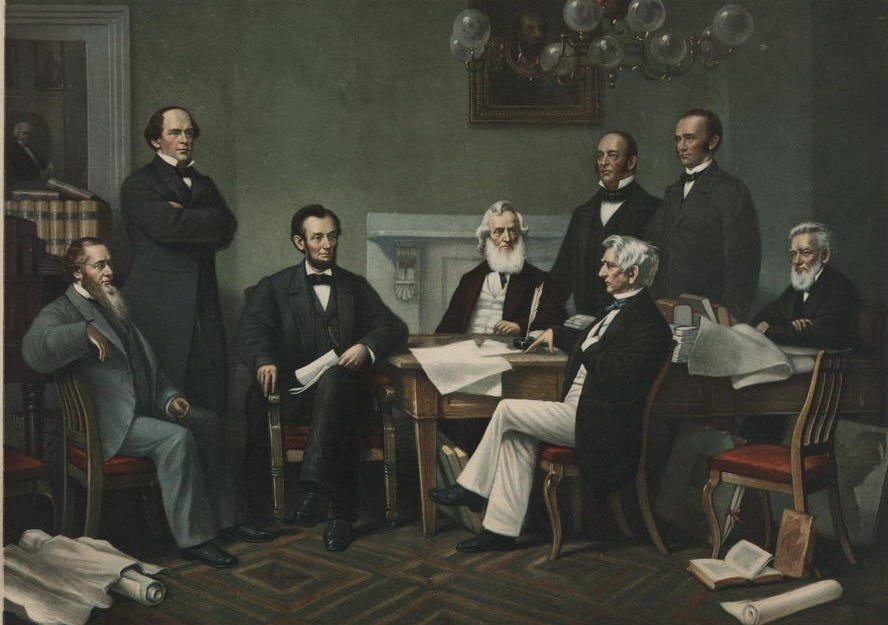
By the nineteenth century, black emerged as the dominant color of respectable male dress. Yet black itself was not simple. Producing durable black fabrics depended on global trade networks, new dyes, and increasingly sophisticated manufacturing processes. The modern suit was therefore both an expression of democratic ideals and the product of an expanding commercial world.
As the conversation unfolds, a broader question emerges. Clothing is never merely clothing. Every society develops expectations about how people should present themselves, and those expectations often reveal assumptions about authority, equality, masculinity, conformity, and power. The black suit may seem timeless, but it is the product of a particular historical moment—one whose influence continues to shape how men present themselves today.
Questions for Reflection and Discussion
Do you think modern people tend to regard fashion as less significant than earlier generations did? If so, why?
What advantages and disadvantages come from a society in which people dress more uniformly?
Why might democratic societies value plainness and restraint in public dress?
How does clothing communicate social information today?
What kinds of material knowledge have modern consumers lost? Why might that be the case?
Can fashion ever truly be separated from politics? What connects them?
What does the history of the black suit suggest about the relationship between equality and conformity?
Are there forms of modern dress that future historians may find as surprising as eighteenth-century clothing seems to us?
How much of what we consider “natural” or “practical” is actually historical and conditional?
What other everyday objects might reveal larger historical transformations if we looked at them more closely?
For Further Investigation
Chloe Chapin, Suitable: The Sartorial Revolution and the Fashioning of Modern Men (Oxford University Press, 2026)
Richard Bushman, The Refinement of America: Persons, Houses, Cities. Second Edition. (Vintage, 2011)
Laura Ulrich, The Age of Homespun: Objects and Stories in the Creation of an American Myth (Vintage, 2009)
John Trumbull’s Declaration of Independence: the Yale version, an oil sketch which he reworked over the years, is pretty drab; the final version in the Capitol might be even drabber
The National Portrait Gallery in Washington, DC: for explorations in imagining fabric
Related Episodes
The Stories in Shoes: Kimberly Alexander on Fashion and Material Culture
New England Fashion: Kimberly Alexander on Why That’s Not an Oxymoron