

Why This Conversation Matters
During the American Civil War, roughly 194,000 Union soldiers and 214,000 Confederate soldiers became prisoners of war. No prior or subsequent American conflict saw numbers like these. In the Second World War, about 124,000 Americans were captured—but the likelihood of capture was roughly one in one hundred. In the Civil War, it was closer to one in five.
Yet prison camps remain strangely peripheral in our public memory of the war.
In our conversation, W. Fitzhugh Brundage argued that Civil War captivity was not merely a tragic byproduct of industrial warfare. It was a formative experience for hundreds of thousands of soldiers and their families. And it represented a structural shift: the normalization of large-scale, bureaucratically managed imprisonment in modern war.
As you read or listen, consider:
When does suffering become policy rather than accident?
How does retaliation reshape moral judgment in wartime?
And why have prison camps been so marginal in Civil War memory compared to battlefields?
Throughlines
The conversation begins with numbers—and with probability. Capture was common in the Civil War in a way it has rarely been in American conflicts. That fact alone demands attention. Brundage stresses that imprisonment was not exceptional; it was a widespread experience that shaped the war’s human landscape.
Early in the conflict, both sides relied on an exchange system formalized in the Dix–Hill Cartel of 1862. Prisoners were paroled and swapped with surprising efficiency. The system assumed a shared commitment to mutual recognition and to certain inherited norms of warfare. But the cartel unraveled in 1863, largely over the Confederacy’s refusal to treat Black Union soldiers as legitimate combatants. Once exchanges collapsed, the scale of imprisonment exploded.
Brundage is careful to resist simple narratives of deliberate extermination. The Confederate government faced staggering shortages—food, medicine, manpower—and struggled to supply its own armies. But scarcity alone does not explain the catastrophe of places like Andersonville. Policy choices mattered. The Confederate leadership prioritized soldiers in the field over captives. Prisoners were viewed as expendable liabilities rather than as men to be sustained for future exchange.
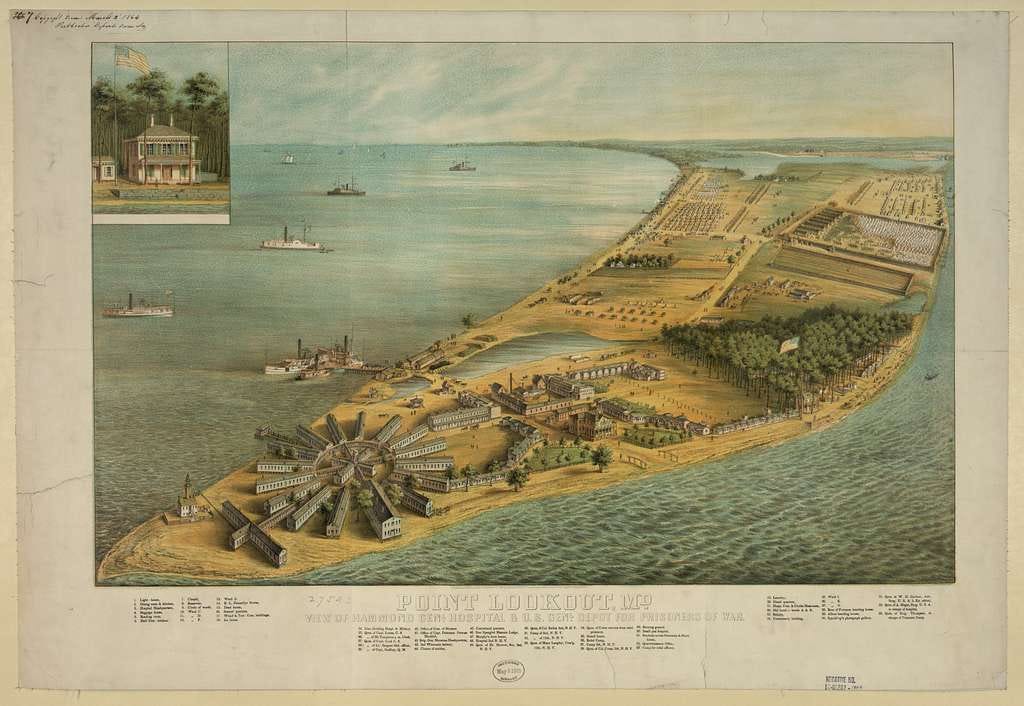
Retaliation hardened positions on both sides. As mortality rose in Southern camps, Northern authorities debated reprisals. Elmira and other Union prisons acquired grim reputations of their own. Brundage underscores that suffering became politicized. Newspapers, families, and officials used prison conditions as evidence of enemy barbarity. The camps became rhetorical weapons as well as physical spaces.
One of the most striking elements of the discussion is Brundage’s insistence that imprisonment must be understood as a relational system. The fate of Union prisoners depended on Confederate calculations about exchange; Confederate prisoners suffered when Northern officials curtailed swaps in response to Southern policies. Decisions reverberated across lines.
The conversation also confronts memory. Andersonville became synonymous with cruelty, symbolized by the postwar trial and execution of Henry Wirz. But Brundage cautions against reducing the story to villainy. The camps reflected the bureaucratic capacities—and failures—of modern states under extreme stress. They exposed how easily institutional logic could eclipse humanitarian obligation.
The discussion closes on the long shadow of Civil War captivity. The war normalized the idea that mass warfare entailed mass imprisonment. Future American conflicts would build successor institutions. Yet the Civil War’s prison camps remain overshadowed by battles and emancipation—despite the fact that for hundreds of thousands of soldiers, captivity was the defining ordeal of the war.
Questions for Reflection & Discussion
Was the emergence of the modern prisoner of war camp inevitable? If so, what about modern warfare made large prison camps inevitable?
How was prisoner exchange regulated at the beginning of the war?
Why did the exchange system collapse in 1863, and what role did the status of Black soldiers play?
To what extent were prison conditions the result of scarcity or deliberate prioritization decisions?
How did retaliation shape policies on both sides of the conflict?
What does Brundage mean by describing imprisonment as a “relational system”?
Why did prisoners become politically useful symbols in wartime rhetoric?
What kind of life and community did prisoners fashion within the camps?
Prisoners were acutely aware that they lived on the knife’s edge; any illness in the camps might be fatal. How did the presence of death shape the lives of prisoners?
Why do battlefields occupy such a dominant place in Civil War memory compared to the experience of prison camps?
For Further Investigation
W. Fitzhugh Brundage, A Fate Worse Than Hell: American Prisoners of the Civil War
Drew Gilpin Faust, This Republic of Suffering: Death and the American Civil War
James M. Gillispie, Andersonvilles of the North: The Myths and Realities of Northern Treatment of Civil War Confederate Prisoners (2008)
Roger Pickenpaugh, Captives in Gray: The Civil War Prisons of the Union (2009)
—, Captives in Blue: The Civil War Prisons of the Confederacy (2013)
Evan A. Kutzler, Living by Inches: The Smells, Sounds, Tastes, and Feeling of Captivity in Civil War Prisons (2019)
Angela M. Zombek, Penitentiaries, Punishment, and Military Prisons: Familiar Responses to an Extraordinary Crisis during the American Civil War (2018)
Robert Scott Davis, Ghosts and Shadows of Andersonville: Essays on the Secret Social Histories of America’s Deadliest Prison (2006)
Dale Fetzer and Bruce Mowday, Unlikely Allies: Fort Delaware’s Prison Community in the Civil War (2000)
William Marvel, Andersonville: The Last Depot (1994)
Richard H. Triebe, Point Lookout Prison Camp and Hospital: The North’s Largest Civil War Prison (2016)
Related Episodes
True Blue — Loyalty and Unionism in the Civil War
American South — rethinking Southern history
Armies of Deliverance—Elizabeth Varon’s interpretation of the Civil War