

Why This Conversation Matters
Most of us think of high-fructose corn syrup as an ingredient—or perhaps as a cultural symbol. Depending on one’s perspective, it represents industrialized food, modern industrialized agriculture, or America’s dangerously sweet tooth. But Brian Leech’s conversation invites us to see something quite different. Corn syrup is not merely a product. It is the endpoint of dozens of historical processes that converged in the seemingly unlikely town of Clinton, Iowa.
But isn’t that one of history’s recurring lessons? The objects we encounter every day can conceal remarkably complicated pasts. A bottle of pop (as they say in Clinton) or a package of cookies turns out to embody international scientific collaboration, agricultural policy, corporate strategy, labor conflict, environmental change, and technological innovation. Looking closely at something as ordinary as corn syrup reminds us that history’s greatest rewards often come from asking deceptively simple questions: Where did this come from? Why here? Why then? Why? Why? Why?
Throughlines
One of the oldest temptations in history is to divide the past into neat categories. Food history belongs over here. Labor history belongs over there. Environmental history occupies another shelf, while the history of technology sits somewhere else entirely. Brian Leech’s story of high-fructose corn syrup quietly dismantles that habit of mind, because nothing in this story stands alone or unrelated.
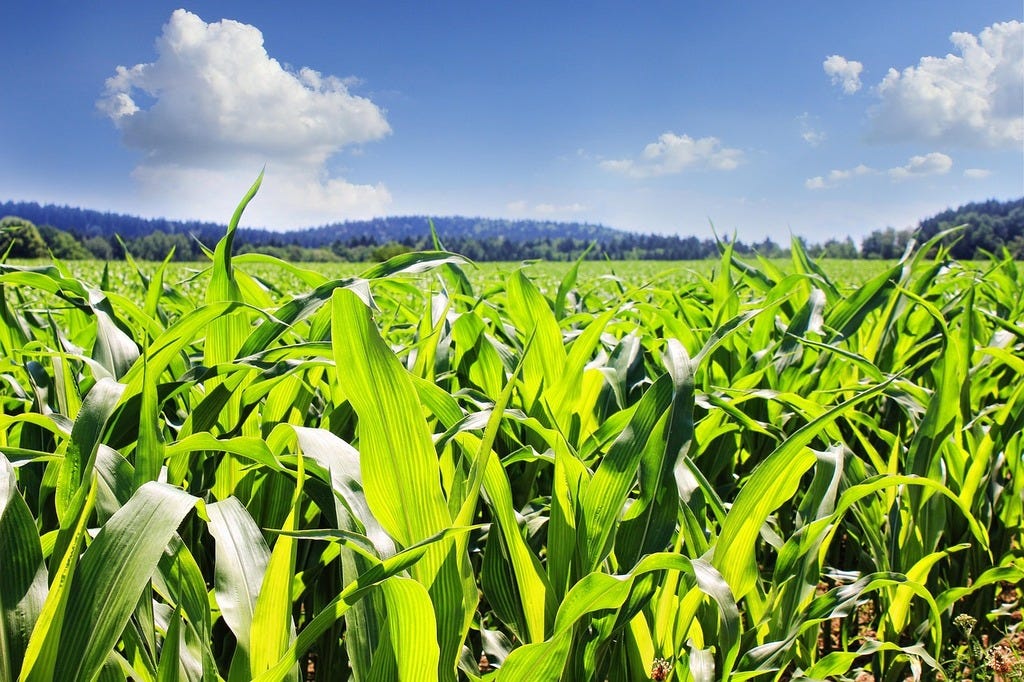
Begin with geography. Clinton, Iowa, appears at first glance to be an unremarkable Midwestern river town. Yet its location on the Mississippi River made it a natural site for processing one of America’s great agricultural commodities. Corn did not simply grow nearby; it arrived continuously along the river and rail network that connected the Corn Belt into a single economic organism. The Mississippi was not merely scenery. It was infrastructure. The factory belonged there because the landscape made it possible.
Then comes technology. Wet milling sounds like an obscure industrial process, but Leech describes it almost as a kind of industrial digestion essential to making the components of modern life. The wet mill separates the corn kernel into its constituent parts, each becoming something different: animal feed, corn oil, starches, adhesives, alcohol, ethanol, sweeteners, and dozens of other products. A single kernel became, as the conversation memorably suggests, almost an entire grocery store. Technology did not replace agriculture, but multiplied its possibilities.
Yet technological innovation alone explains very little. The breakthrough that made high-fructose corn syrup commercially viable depended upon Japanese biochemical research, corporate relationships that crossed the Pacific, and a pair of enzyme samples quietly carried through customs in 1965. Even then, the scientific discovery had to be transformed into an industrial process before it became economically useful. Innovation, historians are reminded once again, rarely consists of a single moment of genius. It is usually an accumulation of experiments, adaptations, and collaborations spread across institutions and continents.
Labor enters the story not as a separate chapter but as another consequence of success. The very profits generated by high-fructose corn syrup reshaped expectations inside the Clinton Corn Processing Company. Workers believed that unprecedented profits should produce safer conditions and higher wages. Executives faced growing uncertainty in commodity markets and sought flexibility instead. The resulting strike became far more than a local labor dispute. It exposed how technological change, corporate consolidation, automation, and global competition were already transforming the industrial Midwest. The bitterness that lingered for decades after the strike reminds us that economic transitions are experienced not as abstractions but as ruptures within families, neighborhoods, and communities.
Perhaps the conversation’s most provocative insight concerns the Midwest itself. Americans often imagine two different regions: the agricultural Corn Belt and the industrial Rust Belt. Leech argues that this distinction has always been misleading. The factories existed because of the farms. The farms increasingly depended upon industrial technology. Manufacturing and agriculture developed together and declined—or transformed—together. Standing at the edge of a Midwestern town, where cornfields abruptly meet elevators, factories, and rail lines, the supposed boundary disappears.
Finally, there is the moral of scale. High-fructose corn syrup eventually became a worldwide commodity, but its history begins in interviews conducted with retirees in one Iowa town. Historical understanding often grows in precisely this way. By examining one place carefully, we begin to see the larger systems in which it participated. Local history is not history written on a smaller canvas. Done well, it becomes one of the best ways of understanding the world itself.
Questions for Reflection
Why do ordinary objects often have extraordinarily complicated histories?
How does following the history of a single product change the way we think about historical causation?
What does the story of corn syrup suggest about the relationship between scientific discovery and technological innovation?
Can we meaningfully separate agricultural history from industrial history in the American Midwest?
How did geography shape the development of Clinton more than individual decision-making?
Why do technological advances often create new labor conflicts rather than simply eliminating old problems?
What does this conversation suggest about the strengths of local history as a way of understanding global history?
How should historians balance structural explanations—such as geography, markets, and technology—with the choices made by individuals?
Why do communities often remember labor conflicts long after the economic issues have changed?
What other everyday products deserve the same kind of historical investigation?
For Further Investigation
Brian James Leech, “Sweet Solution, Sticky Situation: Mill Technology, Organized Labor, and the Midwestern Origins of High Fructose Corn Syrup,” Middle West Review, Volume 10, Number 1, Fall 2023
—, The City That Ate Itself: Butte, Montana and Its Expanding Berkeley Pit (University of Nevada Press, 2019)
Deborah Fitzgerald, Every Farm a Factory: The Industrial Ideal in American Agriculture (Yale University Press, 2010)
Jon Lauck, The Lost Region: Toward a Revival of Midwestern History (University of Iowa, 2013)
John C. Hudson, Making the Corn Belt: A Geographical History of Middle-Western Agriculture (Indiana University Press, 1994)
Sidney Mintz, Sweetness and Power: The Place of Sugar in Modern History (Penguin, 1986)
Related Episodes
Environmental History: Brian Leach explains the basics
Picky: Helen Zoe Veit on How American Children Became the Fussiest Eaters in History
The Lost Region: Jon Lauck on why the Midwest matters