

Why This Conversation Matters
Modern war is usually described through weapons, production, transportation, and manpower. But armies are composed of people, and people require more than ammunition and food. They need information, diversion, consolation, and some means of remaining connected to the lives they left behind.
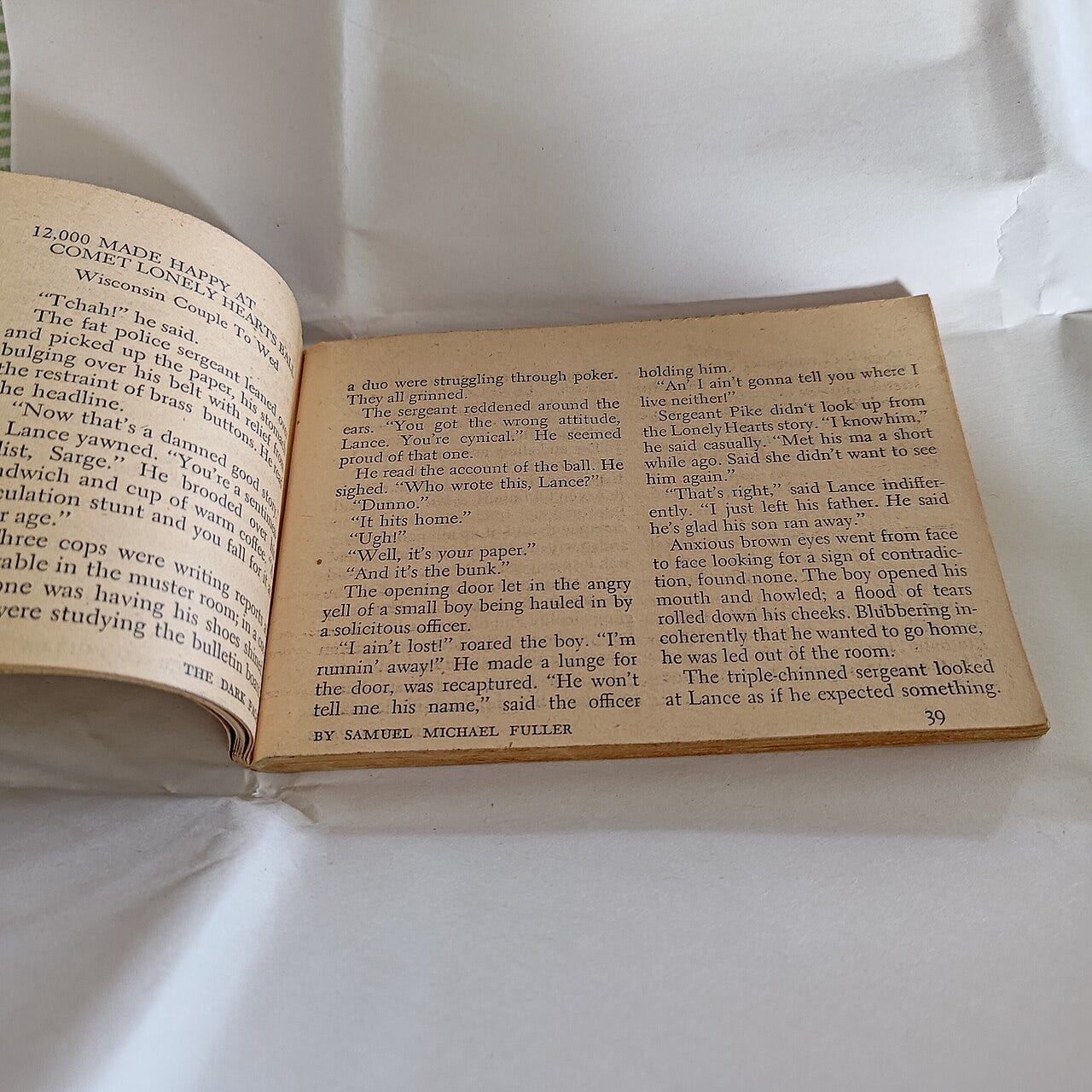
During the Second World War, the United States Army decided that books could help meet those needs. Under Ray Trautman, its Library Section constructed a global system that delivered books and magazines to millions of service members. Its most remarkable products were the Armed Services Editions: complete books printed cheaply in pocket-sized formats and distributed wherever American forces went.
Throughlines
The conversation begins with the improbable formation of Ray Trautman. He grew up in a tiny Ohio farming community without a library and with few books. His family could not afford to send him easily to college, and his education was repeatedly interrupted by financial difficulty. Yet the scarcity of books seems to have intensified his desire for them. Reading allowed him to visit places and encounter lives otherwise unavailable to him.
His early career brought together experiences that would later make him unusually suited to become the Army’s chief librarian. He studied geology, received a commission through the Reserve Officers’ Training Corps, managed bookstores, and won a coveted place as an Army flying cadet. Poor eyesight ended his flying career, but he eventually joined the Civilian Conservation Corps. After recovering from a serious illness—and briefly working at the Library of Congress—he became an educational adviser in the CCC. There he built camp libraries, taught men to read, and used books to help them imagine lives beyond the Depression. His work in the CCC became a small-scale version of what he would later attempt throughout the Army.
After earning a library science degree at Columbia, and being hired as director of the Enoch Pratt Library in Baltimore, Trautman possessed an unusual combination of military, bookselling, educational, and library experience. In 1940 the Army needed precisely that combination. The American Library Association had supplied troops during the First World War, but Army library services had languished during the interwar years. With the return of conscription and the rapid expansion of the armed forces, the Army appointed Trautman to revive the system.
Books initially appeared to be a practical answer to a severe morale problem. New draftees arrived at unfinished camps that lacked proper uniforms, weapons, recreational facilities, and sometimes adequate housing. Movies and live entertainment required equipment and infrastructure. Books were comparatively inexpensive, portable, and available every evening. And of course books provided information. Soldiers needed to understand the countries to which they were being sent, the societies they would encounter, and the reasons the United States was fighting. Reading could simultaneously educate, entertain, and preserve a connection with civilian life.
A world tour Trautman made in 1942 clarified the problems he faced. In the Southwest Pacific, ordinary soldiers told Trautman that they desperately wanted books and magazines. But Douglas MacArthur, commander of the Southwest Pacific Theater, had a different view. He regarded reading as a distraction and independent thought as potentially incompatible with military discipline. Moreover, books shipped into the theater took the space of bacon and bullets, the food and ammunition required to fight a war. When Trautman pressed the case, MacArthur threatened him with charges of insubordination and refused to provide cargo space for books.
MacArthur’s resistance, and the problems of shipping hardcovers, made portability essential. Trautman first experimented with miniature editions of popular magazines. He realized that a publication could be cut down to roughly three and a half by five inches—small enough for a uniform pocket—while still containing a complete book printed in two columns. If books could travel with individual soldiers, they would no longer depend upon permanent libraries or specially allocated cargo space.
The next challenge was persuading publishers to participate. Major firms made their profits from hardcovers and saw little reason to produce inexpensive paperbacks. Trautman argued that millions of service members constituted an enormous potential audience. Publishers could contribute to the war while cultivating readers who might continue buying books after it. Malcolm Johnson of Doubleday and W. Warder Norton helped carry the proposal to the Council on Books in Wartime. Eventually more than seventy publishers participated. Between 1943 and 1947, the program distributed approximately 123 million copies of more than 1,300 titles.
The soldiers answered the question of whether reluctant readers would read: they did so voraciously. Books, magazines, and comics ranked behind only movies as preferred entertainment—and movies were far less consistently available. Unsurprisingly books with any kind of sexual content were pouplar, but so were books that had some connection to family life and memories of home. Betty Smith’s A Tree Grows in Brooklyn acquired a particularly devoted readership. Copies intended to survive only a few readers passed through dozens of hands, while Smith received thousands of letters from service members explaining what the novel meant to them.
The program eventually became entangled in the politics of the 1944 election. A provision of the Soldier Voting Act attempted to prevent the government from sending troops material that might influence their votes. Because almost any discussion of public affairs could be considered political, the provision threatened to ban a vast range of books. Trautman quietly supplied publishers with information about the restrictions, allowing them to alert the public. Americans objected to denying soldiers fighting for democracy the freedom to read, and Congress amended the law.
The conversation ends by considering Trautman’s larger legacy. After the war he continued working to extend books and literacy to rural communities, prisoners, adults with limited reading skills, and people with visual impairments. His papers survived with his family and eventually reached Molly Manning after the publication of When Books Went to War. They revealed not merely a sequel to that book, but the life of a man convinced that reading should be available to everyone.
For Manning, the story offers grounds for optimism. Technologies will change, but the imaginative experience of reading remains. Books allow people to leave their immediate circumstances without physically going anywhere—an ability that was especially precious to homesick and frightened soldiers. The problem may not be that people have ceased to be potential readers. It may be that they have not yet encountered the right book.
Questions for Reflection & Discussion
How did the scarcity of books during Trautman’s childhood shape his later understanding of their value?
Which elements of Trautman’s unusually varied education and early career prepared him to become the Army’s chief librarian?
How did Trautman’s work in the Civilian Conservation Corps anticipate his wartime library program?
Why did the Army regard books as a solution to both its morale problem and its need to educate millions of civilian soldiers?
Why did the Victory Book Campaign fail to supply the kinds of books troops wanted and needed?
What did Trautman learn from his 1942 journey around the world?
What does his confrontation with Douglas MacArthur reveal about competing ideas of military discipline and morale?
Why was the physical design of the Armed Services Editions so important?
How did Trautman persuade publishers that supplying inexpensive books to soldiers served both patriotic and commercial purposes?
What do the popularity of A Tree Grows in Brooklyn and the soldiers’ letters to Betty Smith reveal about reading under wartime conditions?
Why did the Soldier Voting Act threaten the freedom of service members to read, and how was that restriction overcome?
Did the Armed Services Editions help create the postwar American reading public, or did they merely reveal an appetite that already existed?
Is “escapist reading” a useful category, or does all reading involve temporarily escaping one’s immediate circumstances?
What might Trautman’s belief in finding the right book for each person contribute to contemporary debates about literacy and the future of reading?
For Further Investigation
Books
Molly Guptill Manning, A Librarian’s War: The Man Who Fought World War II with Books and Brought the Joy of Reading to Millions (Oxford University Press, 2026).
Molly Guptill Manning, When Books Went to War: The Stories That Helped Us Win World War II (Houghton Mifflin Harcourt, 2014).
Molly Guptill Manning and Brian Anderson, The Best-Read Army in the World (Grolier Club, 2020).
Betty Smith, A Tree Grows in Brooklyn (Harper & Brothers, 1943).
Ernest Hemingway, ed., Men at War: The Best War Stories of All Time (Crown, 1942).
Exhibitions and Archives
The Grolier Club, “The Best-Read Army in the World.”
The Library of Congress, Armed Services Editions Collection.
John Y. Cole, “Books in Action: The Armed Services Editions,” Library of Congress.
Related Episodes
1942—When World War II Engulfed the Globe: Peter Fritzsche on the decisive year of a global conflict.
Book Makers: Adam Smyth on the lives behind printed pages
The Intellectual Life in Difficult Circumstances: Jonathan Rose on the education of the British working classes
The Devils Will Get No Rest: James B. Conroy on Roosevelt, Churchill, and the Casablanca Conference.
Tags: Molly Guptill Manning, Ray Trautman, Armed Services Editions, World War II, Libraries, Reading, Books, Publishing History, Military History, Censorship, Literacy, Intellectual History