

Why This Conversation Matters
We often call the nineteenth century the age of steam. Railroads crossed continents, steamships joined ports, and factories filled the sky with smoke. Yet the world created by these technologies remained profoundly dependent upon animals. The century that began as an Age of Steam and ended as an Age of Electricity was, throughout its decades, an Age of the Horse.
Horses and their equine relatives supplied the connective power that made industrial society function. They transported people through cities, moved freight between and within railroads and warehouses, hauled agricultural products to market, worked inside mines, and pulled fire engines toward burning buildings.
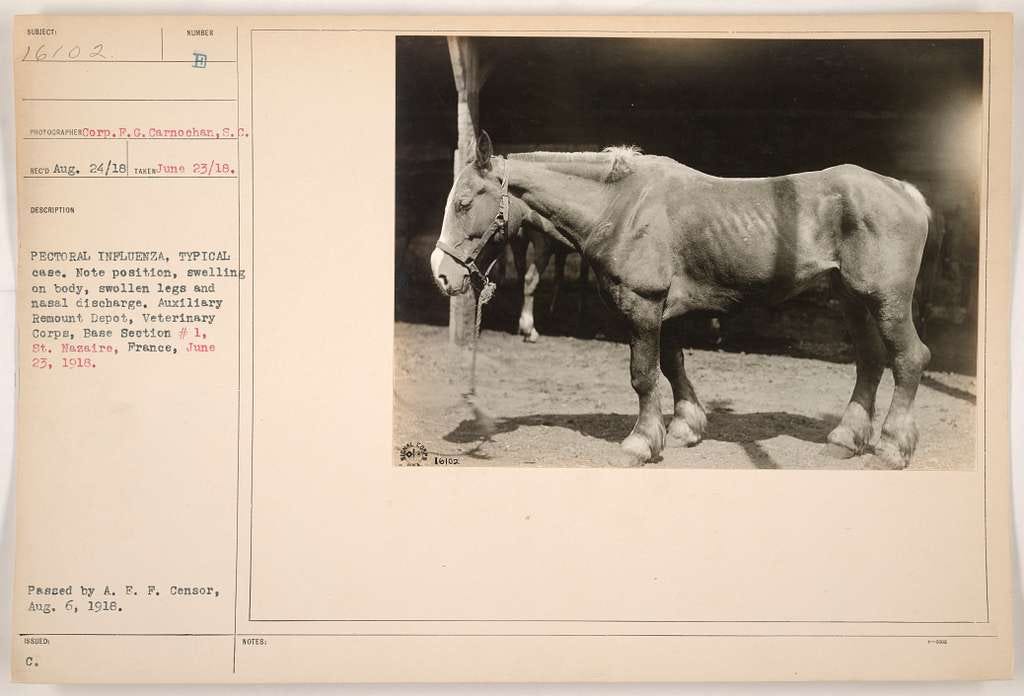
The Great Horse Flu of 1872–73 exposed that dependence. When horses became sick, the economy began to stop. The resulting crisis crossed the boundaries separating environmental, economic, political, medical, and animal history.
As you consider the conversation, ask:
What forms of labor become invisible when a technology works reliably?
How does a disease become a social and political event rather than merely a biological one?
What dependencies in our own world would become visible only after they failed?
Throughlines
The conversation begins by reconstructing a world built upon horse power. In the 1870s, horses, mules, and donkeys performed many of the tasks now assigned to internal-combustion engines. They pulled streetcars and wagons, moved goods through warehouses, hauled fire engines, powered machinery, and worked underground in mines. Steam transportation actually increased the demand for horses because the proliferation of railroads and ships required even more animals to complete the shorter connections between ports, stations, businesses, and consumers.
Humans and horses inhabited the same environments. Stables and carriage houses stood behind homes. Streets and alleys were designed to accommodate horse-drawn vehicles. Hay markets, livery businesses, veterinary services, and corpse-removal contractors formed essential parts of the urban economy. The city was also shaped by the habits of horses. Horses are highly social and mobile animals. Their work and habits (communicating constantly through noise) brought them constantly into contact with one another, creating ideal conditions for a respiratory virus to spread.
The outbreak began in September 1872 in the agricultural townships north of Toronto. Andrews argues that the extraordinarily high infection rate points to a novel influenza variant. The region combined wild waterfowl, domesticated animals, intensive agriculture, imported breeds, and ambitious livestock improvement. Viral evolution remained contingent—the new variant might have appeared elsewhere—but a globalizing agricultural economy created abundant opportunities for reassortment and transmission.
Once the disease reached Toronto, it spread with remarkable speed. Horses existed to move, and their movements carried the virus through cities, farms, markets, transportation corridors, and international borders. News traveled faster still. Telegraph networks and wire services ensured that people generally read about the epizootic before it reached them. Andrews’s research draws upon thousands of digitized newspaper reports, allowing him to follow both the disease and the information surrounding it.
The epidemic created a conflict between animal welfare and economic survival. Sick horses needed rest, warmth, food, and care. But working-class carters, cab drivers, and small operators often depended upon one or two animals for their daily income. As the supply of healthy horses contracted, the price of hauling rose dramatically. Continuing to work a sick animal could mean the difference between feeding a family and losing a livelihood.
The recently organized animal-protection movement attempted to intervene. Henry Bergh and the ASPCA used publicity, public shaming, and police authority against people and corporations that continued working sick horses. Initial sympathy for the animals gradually collided with public frustration as transportation and commerce remained disrupted. The controversy revealed how concern for animal suffering could become entangled with class power when reformers judged the choices of people who possessed few alternatives.
Death created another crisis. Influenza itself was not usually fatal, but pneumonia, bronchitis, overwork, and immune complications killed large numbers of horses. With the corpses of horses piling up, cities lacked sufficient healthy animals to remove the dead ones. Offal contractors using teams of oxen hauled carcasses away, while an extensive rendering economy converted hides, bones, hair, fat, and other remains into glue, handles, strings, industrial materials, and even into products used in sugar refining.
The outbreak also struck at the unsettled economy of the Reconstruction South. Farms and plantations depended upon equines to move cotton, tobacco, and sugar into commercial networks. Warehouses, cotton presses, rail connections, river landings, and ports required horse or mule power at every stage. The Civil War had already destroyed enormous numbers of Southern animals. Now illness disrupted recovering herds and delayed the movement of crops.
Andrews argues that these interruptions helped prepare the ground for the depression that followed the Panic of 1873. The horse flu did not single-handedly cause the financial collapse. But repeated local declines in production, the Great Boston Fire, broken supply chains, and accumulating losses made an already vulnerable economy less capable of absorbing a financial shock. The ensuing depression had profound consequences for Reconstruction and the willingness of Northern voters to sustain federal intervention in the South.
The disease followed different patterns farther west. It traveled rapidly through corridors of settlement but appears to have affected Indigenous horse herds differently. Native horses were less frequently confined in crowded stables, may have been worked differently, and often possessed different breeding histories. Restrictions upon Indigenous mobility may also have slowed transmission. At the same time, Native communities faced crises so severe that horse sickness did not always receive much attention in official sources.
By the fall of 1873, the outbreak had largely petered out after reaching British Columbia, Mexico, Central America, and other regions. Yet its effects continued. Horses suffered lingering illness, later outbreaks were compared with the “epizootic,” and nineteenth-century Americans remembered the crisis for decades. Modern genetic studies suggest that the 1870s may also have marked an important moment in the evolution of influenza across several species.
The conversation concludes with the relationship between this history and COVID. Andrews began the project before 2020, but the pandemic sharpened his awareness that outbreaks do not merely cause events. They reveal structures, dependencies, inequalities, and conflicts that were already present. His GIS maps similarly show the disease moving through North America like a wave, following the infrastructures of settlement and commerce. The Great Horse Flu becomes not simply a story about sick horses, but a way of seeing an entire society.
Questions for Reflection & Discussion
Why did the spread of steam power increase rather than immediately reduce the demand for horses?
What kinds of labor did horses, mules, and donkeys perform in nineteenth-century cities and industries?
How did the physical and social organization of horse-powered society encourage the spread of influenza?
What conditions near Toronto may have enabled a novel influenza variant to evolve?
Why does Andrews emphasize both biological contingency and economic structure when explaining the outbreak?
How did telegraphs, wire services, and newspapers shape the public experience of the epizootic?
Why was resting sick horses economically difficult for working-class owners and drivers?
What does the response of the animal-protection movement reveal about the relationship between humanitarian reform and class?
How did cities dispose of dead horses, and what does that process reveal about the nineteenth-century industrial economy?
In what ways did horse sickness disrupt the agricultural and commercial systems of the Reconstruction South?
How persuasive is Andrews’s argument that the outbreak contributed to the depression following the Panic of 1873?
Why might the disease have behaved differently among Indigenous horse herds and in less integrated regions of North America?
What did writing during COVID allow Andrews to recognize about the relationship between epidemics and social conflict?
Why was the Great Horse Flu remembered for decades and then largely forgotten?
What essential forms of labor or infrastructure in our own society become visible only when they fail?
For Further Investigation
Books
Thomas G. Andrews, The Great Horse Flu: A Forgotten Contagion and the Fate of Reconstruction America (University of North Carolina Press, 2026).
—, Killing for Coal: America’s Deadliest Labor War (Harvard University Press, 2008).
—, Coyote Valley: Deep History in the High Rockies (Harvard University Press, 2015).
Clay McShane and Joel A. Tarr, The Horse in the City: Living Machines in the Nineteenth Century (Johns Hopkins University Press, 2007).
Jessica Wang, Mad Dogs and Other New Yorkers: Rabies, Medicine, and Society in an American Metropolis, 1840–1920 (Johns Hopkins University Press, 2019).
William T. Taylor, Hoof Beats: How Horses Shaped Human History (University of California Press, 2024).
Elizabeth A. Fenn, Pox Americana: The Great Smallpox Epidemic of 1775–82 (Hill and Wang, 2001).
Maps and Online Resources
Adoniram B. Judson, “History and Course of the Epizootic Among Horses upon the North American Continent,” American Public Health Association Reports 1 (1873).
“Map of the Great Epizootic, 1872–1873,” York University.
Mary Baxter, “What a Horse Flu Reveals about Societies at the Dawn of Industrialization.”
Related Episodes
Horse: Timothy Winegard on the animal that transformed human history.
Mosquito: Timothy Winegard on the most lethal predator in human history.
Mad Dogs and Other New Yorkers: Jessica Wang on rabies, medicine, animals, and life in nineteenth-century New York
The Great Shadow: Susan Wise Bauer on How Sickness Shapes What We Do, Think, Believe, and Buy
Pox Romana: Colin Elliott on the Plague That Shook the Roman World
Tags: Thomas G. Andrews, Great Horse Flu, Equine Influenza, Horses, Reconstruction, Panic of 1873, Animal History, Environmental History, Capitalism, Urban History, Epidemics, Human-Animal Relations