

Why This Conversation Matters
The Declaration of Independence often appears in hindsight because we know the ending. We know the United States survives. We know the Revolution succeeds. We know the words become famous and take on a life of their own.
But it’s sometime hard to remember that nobody in July 1776 knew that. For contemporaries, the Declaration was not a monument. It was information. It was a provocation. It arrived amid rumors, military reports, newspaper stories, political arguments, and personal anxieties. It was something people had to react to in real time. It was something that made people pick a side.
Emily Sneff’s work invites us to recover that uncertainty.
Throughlines
The conversation opens with the deceptively simple question of how people learned about independence. Rather than beginning with Jefferson or Congress, Sneff begins with circulation. The Declaration moved through newspapers, broadsides, handwritten copies, and public readings. It entered a world already saturated with wartime information, rumor, and speculation. Americans did not encounter it in isolation; they encountered it amid a constant stream of competing news.
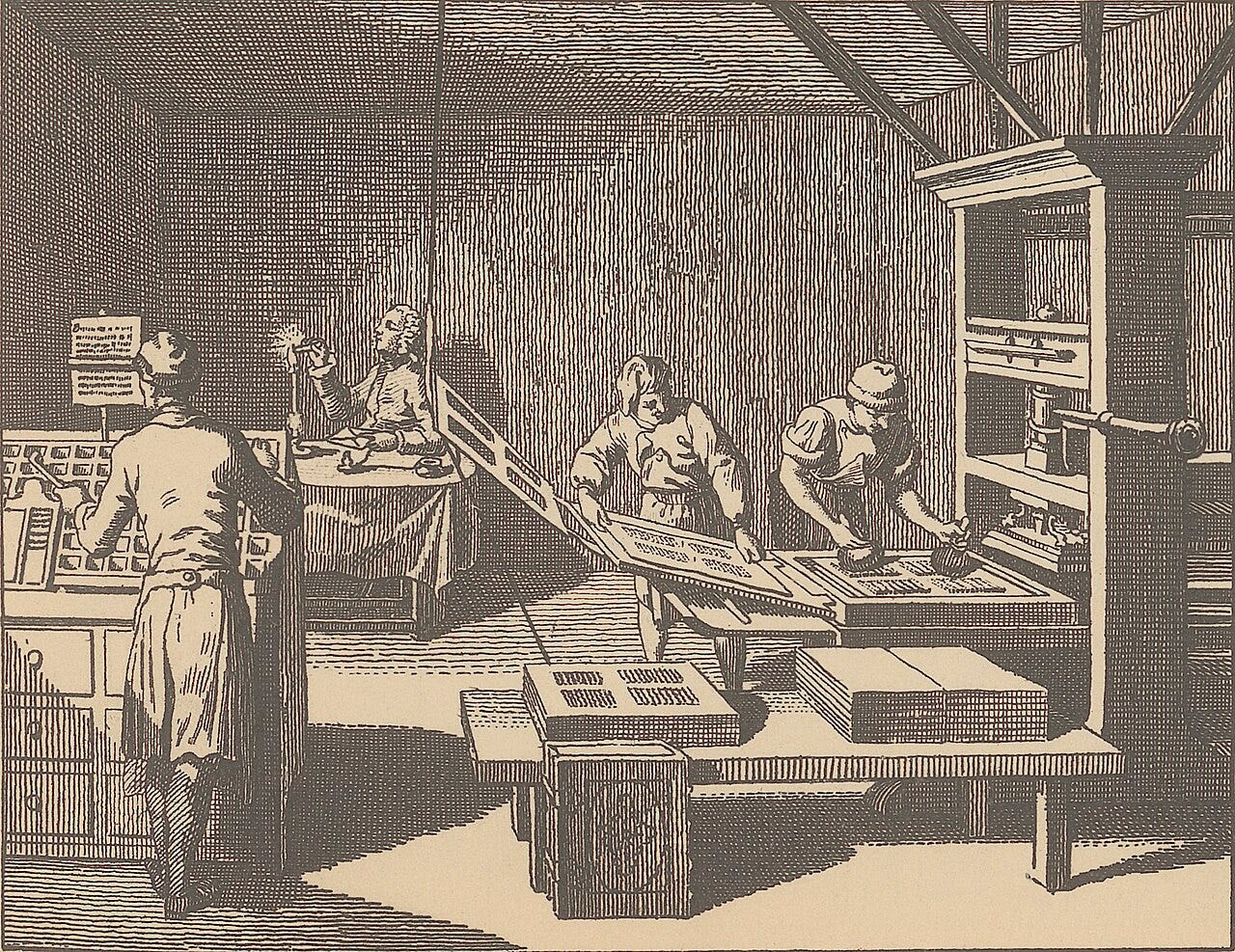
A central figure in the story is printer John Dunlap. His broadside became the vehicle through which the Declaration spread across the continent. Yet Sneff emphasizes that the process involved many more people than Dunlap alone. Printers, apprentices, laborers, and readers all contributed to the dissemination of the text. The Declaration’s reach depended on networks rather than on individuals.
The discussion then turns to public readings. These events were not simply practical solutions for reaching illiterate audiences but civic rituals, based upon precedents like the King’s birthday and Guy Fawkes’ Day. Communities gathered together to hear the Declaration, celebrate independence, and symbolically sever ties with Britain. Bells were rung, cannons fired, effigies were burned, and royal symbols were destroyed. Independence was communicated through performance as much as through text; but the text was the spark.
At the same time, not everyone welcomed the news. Some individuals hesitated, doubted, or resisted. Sheriffs declined to read the Declaration. Ministers struggled with the implications of abandoning prayers for the king. Anglican clergy wrestled with obligations that were not merely political but spiritual. For many people, the Declaration forced difficult choices rather than inspiring immediate enthusiasm.
Translation emerges as another major theme. German-speaking communities in Pennsylvania quickly received sophisticated translations produced by people deeply familiar with revolutionary language because they had been participants in the long argument leading to that moment. Elsewhere, translation often distorted meaning. The story highlights the importance of cultural context and demonstrates how difficult it can be to transmit political ideas across linguistic boundaries.
One particularly striking episode concerns diplomacy. The first foreign acknowledgement of American independence came not from France but from native leaders from Nova Scotia meeting Massachusetts officials. This moment complicates traditional narratives that focus exclusively on European reactions to the Revolution.
The conversation also reveals the surprising weakness of American diplomatic communication. Silas Deane waited in France for months without receiving the official document he needed to present at Versailles. Meanwhile, British officials acquired copies with ease. The episode illustrates the contrast between revolutionary aspirations and administrative realities.
The final section follows the transition from news to memory. Mary Katharine Goddard’s January 1777 printing, complete with the names of the signers, marks a turning point. The Declaration ceased to be merely current information and began to become an artifact. The document that had once circulated through newspapers and rumor slowly entered the realm of commemoration and preservation.
Questions for Reflection and Discussion
What changes when we view the Declaration as news rather than scripture?
Why were public readings so important?
How did communities perform independence?
Why did some ministers struggle with the Declaration?
What challenges arise when revolutionary ideas are translated?
Why did Indigenous leaders respond differently than Europeans?
What does the Silas Deane episode reveal about the Continental Congress?
How did British newspapers shape reception of the Declaration?
Why did the Declaration eventually cease to be news?
What was gained—and lost—when it became a historical artifact?
For Further Investigation
Books
Emily Sneff, When the Declaration of Independence Was News (Oxford University Press, 2026)
Michael Auslin, National Treasure: How the Declaration of Independence Made America (Simon and Schuster, 2026)
Pauline Maier, American Scripture: Making the Declaration of Independence (Vintage, 1998)
Garry Wills, Inventing America: Jefferson’s Declaration of Independence (Knopf Doubleday, 2018)
Carl Becker, The Declaration of Independence: A Study in the History of Political Ideas
David Armitage, The Declaration of Independence: A Global History (Harvard, 2008)
Primary Sources
Dunlap Broadside (National Archives)
Goddard Broadside (New York Public Library)
Treaty of Watertown (Historical Society of Watertown)
Abigail Adams to John Adams, 13 July 1776: “I cannot but feel sorry that some of the most Manly Sentiments in the Declaration are Expunged from the printed coppy. Perhaps wise reasons induced it.”
Related Episodes
The Man at the Center of Two Revolutions: Martin Clagett on William Small, Thomas Jefferson’s teacher and James Watt’s collaborator
Republic and Empire: Andrew O’Shaughnessy on the global causes and consequences of the American Revolution
Quaker Founder: Jane E. Calvert on John Dickinson, Quaker Constitutionalism, and America’s “Penman of the Revolution”
The Great Atlantic Freedom Conspiracy: Micah Alpaugh on correspondence, revolution, and social movement
Thomas Jefferson and the Fight Against Slavery: Cara Rogers Stevens on
rethinking Jefferson
Tags
America 250; Declaration of Independence; Emily Sneff; American Revolution; Newspapers; Print Culture; John Dunlap; Mary Katharine Goddard; Thomas Jefferson; Public Memory; Early America; Historical Thinking