

Apology: this should be a “Friday Reflection”, but for technical difficulties of little interest to anyone other than myself and that barely, I could only publish it today.
Why This Conversation Matters
The election of 1860 occupies a unique place in American history. It was probably the most consequential election this nation has ever held. Yet because we know what followed—secession, civil war, emancipation, the destruction of the slave-system, the death of tens of thousands, the ruin of the American South—we are tempted to see the outcome as inevitable. Abraham Lincoln wins, the South leaves the Union, and history proceeds on its majestic and inevitable course.
Jonathan Earle pounds home to us how misleading that perspective is. The election was anything but inevitable. It emerged from political improvisation, fractured parties, technological change, regional fears, blithe hoopes, and a series of contingent events that could easily have unfolded differently. To recover that uncertainty is not only the way to better understand 1860, but to recover the experience of history when the future remains unwritten.
More broadly, this conversation asks us to think about democracy as a historical achievement rather than a permanent condition. Elections do not resolve political disagreements simply because votes are counted. They work only so long as participants continue to believe that constitutional politics remains preferable to every alternative. That assumption was tested severely in 1860.
Throughlines
One of the historian’s first responsibilities is to restore uncertainty. The people who lived through the election of 1860 did not know they were approaching the Civil War. They knew only that the political order seemed increasingly unstable, that familiar institutions were failing to resolve deep disagreements, and that every month seemed to produce another surprise.
Jonathan Earle’s account begins before a single vote was cast. John Brown’s raid on Harpers Ferry in October 1859 transformed the political climate. Brown’s execution made him both martyr and menace, forcing Republicans to navigate an uncomfortable distinction between opposing slavery and rejecting violent abolitionism. The raid intensified sectional distrust while simultaneously revealing how differently Americans interpreted the same event.
The nation’s political institutions reflected that growing instability. Even the election of a Speaker of the House became a months-long constitutional struggle, with arguments over Hinton Rowan Helper’s The Impending Crisis of the South preventing Congress from organizing itself. It is a reminder that constitutional systems often reveal their greatest strains during ordinary procedures that suddenly cease to function.
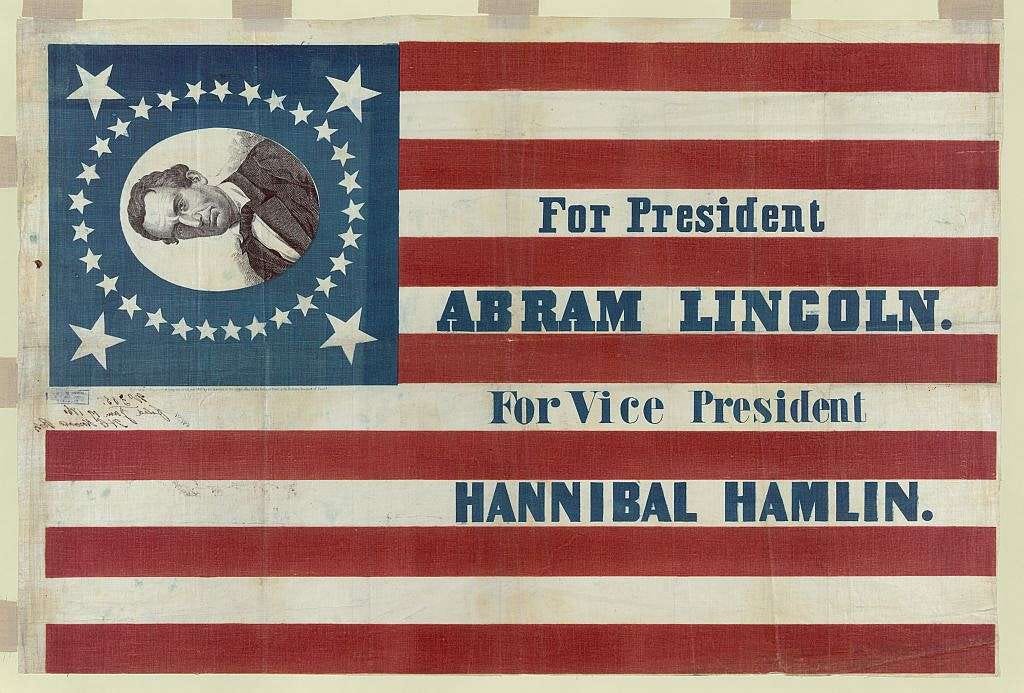
The conversation also highlights how rapidly politics itself was changing. The telegraph accelerated the circulation of news. National party conventions became possible because expanding railroads and increasingly large hotels allowed hundreds of delegates to gather in one place. Cheap printing made campaign biographies and pamphlets available to ordinary voters in unprecedented numbers. Organizations such as the Wide Awakes introduced disciplined mass political demonstrations that inspired supporters while alarming opponents. Every generation believes its political technologies are revolutionary; 1860 reminds us that earlier generations experienced similar upheavals.
Yet perhaps the most important lesson concerns contingency. Lincoln was hardly the inevitable Republican nominee. William H. Seward entered the convention as the favorite. The Democratic Party might have remained united. Constitutional Union candidates hoped to postpone sectional conflict altogether. Even after Lincoln’s victory, compromise remained imaginable to many Americans. History retained multiple possible futures until political choices gradually narrowed them.
That narrowing occurred because increasing numbers of political leaders ceased to regard ordinary electoral defeat as acceptable. Southern Fire-Eaters did not merely oppose Lincoln. Many had already concluded that the simple chance of Republican victory itself demonstrated the failure of the constitutional order. Once enough people no longer accepted the legitimacy of electoral outcomes, the institutions designed to contain political conflict could no longer perform their essential function. Democracy depends not only upon persuasion but upon restraint.
Walt Whitman called 1860 the “Year of Meteors,” a year illuminated by sudden, dazzling events. Historians must also attend to what lies between those flashes of light, the accumulated decisions, fears, ambitions, compromises, and miscalculations that slowly reshape political life. By recovering that uncertainty, Jonathan Earle restores the election of 1860 to what it truly was—not the beginning of an inevitable story, but the last great democratic contest before Americans abandoned politics for war.
Questions for Reflection
Why do later generations so often mistake historical outcomes for historical inevitabilities?
How does recovering contingency change our understanding of the election of 1860?
What role did new communications technologies play in reshaping nineteenth-century politics?
Why can routine constitutional procedures become flashpoints during periods of political crisis?
How should political leaders respond when they believe an election threatens fundamental principles?
What distinguishes passionate political disagreement from a crisis of constitutional legitimacy?
Why is accepting electoral defeat essential to representative government?
How did the election of 1860 expose both the strengths and weaknesses of the American party system?
What can historians learn by studying elections as lived experiences rather than predetermined outcomes?
In what ways does Whitman’s image of the “Year of Meteors” capture the experience of living through a period of rapid historical change?
For Further Investigation
Jonathan Earle, He Has the People: Abraham Lincoln and the Election of 1860
Orville Vernon Burton, The Age of Lincoln
Richard Carwardine, Lincoln: A Life of Purpose and Power
Michael F. Holt, The Election of 1860: A Campaign Fraught with Consequences
Harold Holzer, Lincoln President-Elect: Abraham Lincoln and the Great Secession Winter, 1860–1861
Eric Foner, The Fiery Trial: Abraham Lincoln and American Slavery
Walt Whitman, Leaves of Grass (1871 edition), “Year of Meteors (1859–60)”
Related Episodes
True Blue: Clayton Butler on white Unionists in the Deep South
Civil War Politics: Paul Escott on political traditions, personalities, and the limits of pragmatism
The Abolitionist Civil War: Frank Cirillo on how the abolitionist movement transformed during the Civil War, eventually destroying itself
Horace Greeley, American Editor: James Lundberg on the Method in His Madness
The Democracy We Must Keep: David O. Stewart on the founding documents.
The Long Revolution: Nathan Perl-Rosenthal on remembering the American Revolution.